
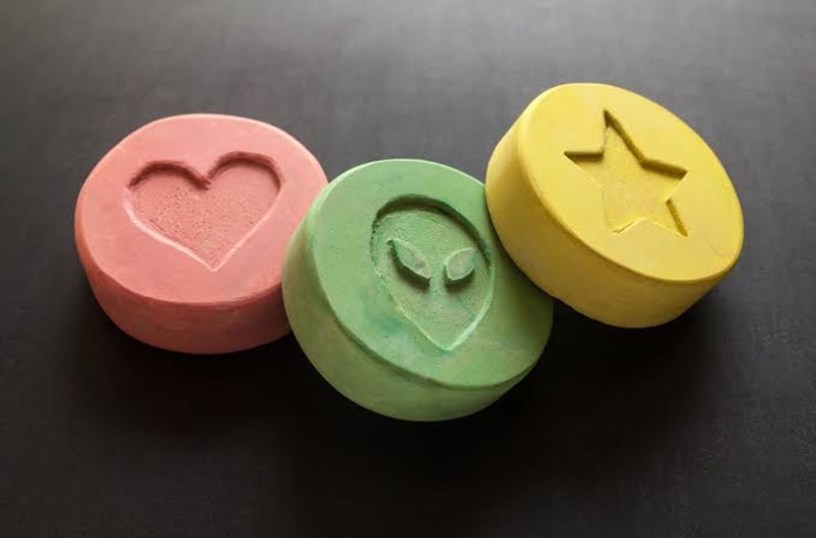
“Legal Molly,” Molly, and ecstasy are often discussed as though they mean the same thing. They do not.
Traditional Molly and ecstasy generally refer to products expected to contain MDMA, a federally controlled Schedule I substance in the United States. “Legal Molly,” by contrast, is a marketing term sometimes used for products formulated with different psychoactive ingredients. At Utoya, we believe understanding that distinction starts with looking past the product name and examining what is actually inside.
Key Takeaways
- Molly and ecstasy commonly refer to MDMA, although products sold illicitly may contain other substances.
- MDMA remains a Schedule I controlled substance under U.S. federal law.
- “Legal Molly” is a marketing term rather than an official legal or scientific classification.
- Products marketed as Legal Molly may use ingredients other than MDMA.
- A product’s name alone cannot establish whether it is legal or safe.
- Ingredient transparency and current federal and state laws should be considered before making assumptions about any psychoactive product.
Is Molly the Same as Ecstasy?
Molly and ecstasy are commonly used as names for MDMA, or 3,4-methylenedioxymethamphetamine.
The terms have historically suggested different forms. “Molly” is often associated with powder or crystals, while “ecstasy” is commonly associated with tablets. However, a street name or physical appearance cannot confirm a product’s contents.
The U.S. Drug Enforcement Administration currently lists MDMA, also referred to as ecstasy, as a Schedule I controlled substance.
That means traditional Molly containing MDMA should not be confused with commercially marketed products using phrases such as “Legal Molly” or “Molly 2.0.”
What Is Legal Molly?
Legal Molly does not refer to one officially recognized substance.
Instead, the phrase is generally used in marketing for products positioned as alternatives to traditional Molly. These products may contain different active ingredients and formulations.
On Utoya, for example, products marketed within this category currently identify 5-MAPB as an active ingredient.
That ingredient difference is important. A product containing 5-MAPB is not simply another form of MDMA because 5-MAPB and MDMA are different chemical substances.
However, the word “legal” should still be treated carefully.
Does “Legal Molly” Mean It Is Legal Everywhere?
No. A marketing label does not determine a substance’s legal status.
Federal law contains provisions covering certain controlled substance analogues. The DEA explains that a substance does not necessarily have to appear individually on a controlled-substance list to potentially be treated as Schedule I under federal law when the statutory requirements for a controlled substance analogue are met.
Under 21 U.S.C. §813, controlled substance analogues intended for human consumption can be treated as Schedule I substances for purposes of federal law.
State laws may impose additional restrictions. For that reason, we recommend treating “Legal Molly” as a product-category or marketing phrase rather than a guarantee about legality in every jurisdiction.
Why Ingredient Transparency Matters
Similar branding can make very different substances appear interchangeable.
We think consumers should start by identifying the active ingredient, reviewing available product documentation, and understanding the laws applicable to that particular substance. That approach provides more useful information than relying on names such as Molly, ecstasy, Legal Molly, or Molly 2.0.
Transparency also matters because psychoactive products can carry significant health risks. Utoya’s current product information for 5-MAPB products includes warnings about potential overheating, dehydration, serotonin-related complications, medication interactions, and combining substances.
Conclusion
The biggest difference between Legal Molly and ecstasy comes down to what the product actually contains.
Ecstasy and traditional Molly generally refer to MDMA, which remains federally controlled. Legal Molly is a marketing term that may describe products made with other ingredients, including products currently listed by Utoya as containing 5-MAPB.
We encourage readers to look beyond branding. Ingredient disclosure, reliable product information, health considerations, and current federal and state laws provide a much clearer picture than a product name alone.
Frequently Asked Questions
Is Legal Molly the same as ecstasy?
No. Ecstasy commonly refers to MDMA. Products marketed as Legal Molly may contain completely different active ingredients.
Is MDMA legal?
MDMA remains a Schedule I controlled substance under U.S. federal law.
Is “Legal Molly” an official drug classification?
No. Legal Molly is a marketing term rather than an official scientific or legal classification.
What is 5-MAPB?
5-MAPB is a psychoactive substance chemically distinct from MDMA. Utoya currently lists 5-MAPB as the active ingredient in some products marketed within its Legal Molly category.
Does a product labeled Legal Molly automatically mean it is legal?
No. Legal status depends on the substance, applicable federal and state laws, and other circumstances. Product branding alone cannot establish legality.
This post was written by a professional at Utoya Organics. Utoya Organics is a producer, developer and manufacturer of hemp-derived products. Buy Delta 8 THC, Delta 9 THC, THCP, HHC, THC-O, CBD, CBG, CBN, and more! We formulate our own products and distribute them all over the United States with over 400 locations nationwide. Utoya specializes in cannabinoid products such as edibles, flowers, tinctures, vapes, Boom Boom Microdose Mushroom Gummies and more! All of our oil blends are Nano-Amplified to absorb faster (maximum bioavailability). All of our vaping products and hemp flowers are free of any solvents. No MCT, no alcohol, no vitamin E, no VG. Our cannabinoid distillates are never isolates, so it’s always golden in color and very effective. All third-party tested to meet compliance.

